ShiftKey's Burnout Resources Hub for Facilities
We’re exposing burnout for what it is — a critical mental health issue that can undermine patient care — and offering resources to help you create meaningful change in your organization.


Cost to replace one nurse is between $51,000 and $72,000
0

A three-minute assessment to help you identify your burnout risk and what's driving it.

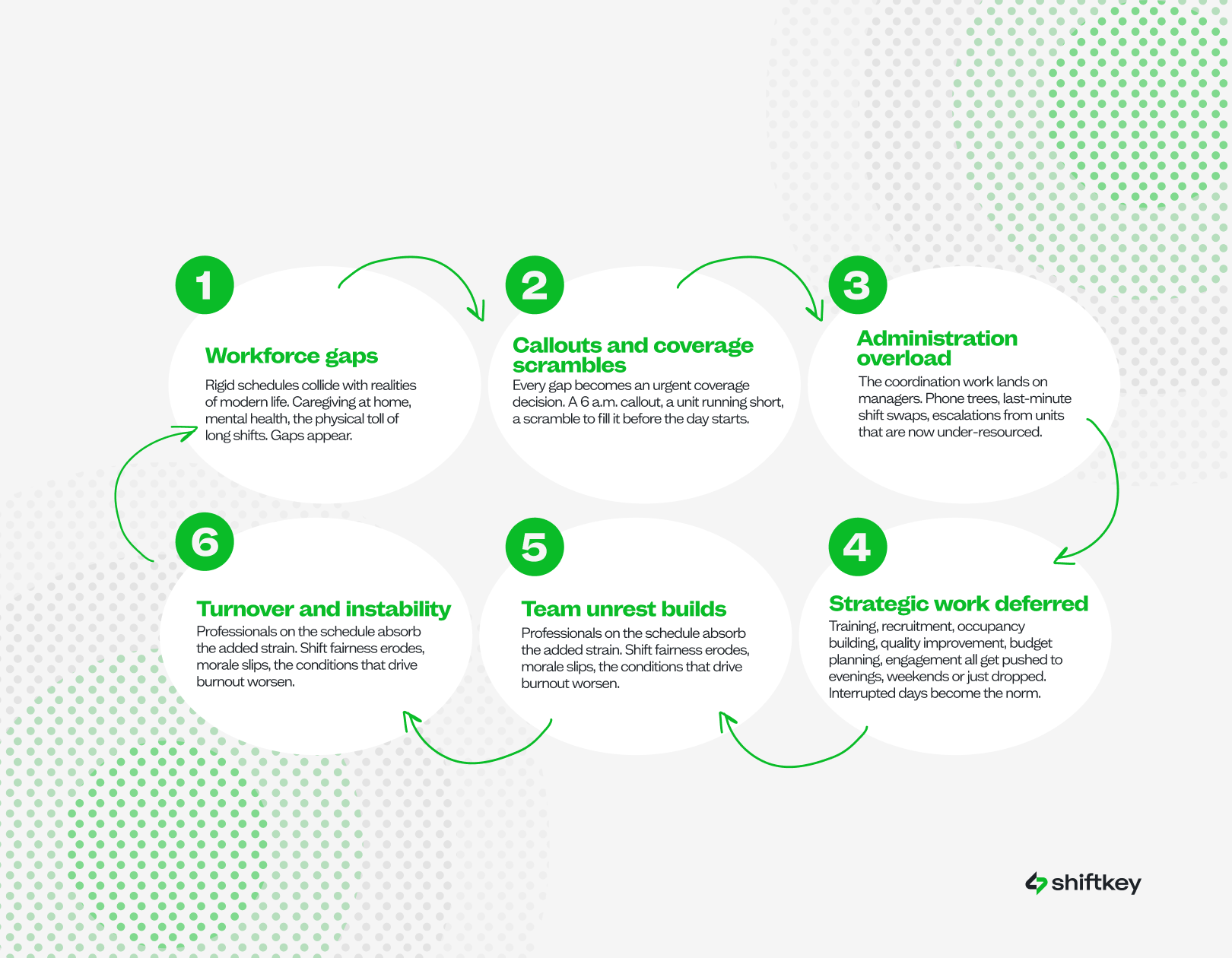
How workforce instability creates a chain reaction that wears down everyone in the building.
Moving beyond burnout means focusing on the mental health of the people doing the work—giving them more freedom, flexibility and time to breathe.

Learn how to enhance nurse satisfaction and create a supportive, flexible work environment.


10 techniques you can start implementing right now to reduce the common causes of burnout and support your care team’s well-being.


Learn about the causes and effects of nurse turnover, and discover solutions that can help you retain more team members.

Today’s healthcare professionals are balancing personal caregiving responsibilities, financial pressures, and a growing awareness of mental health. See why evolving work structures to meet their needs can prevent burnout and help more of them stay in the industry.

Sixty-two percent of healthcare professionals say they're burned out right now. Download the infographic to discover a long-term burnout reduction strategy you can start using today.

This article explores how post-acute and acute care coverage shortages interweave and touches on some innovative solutions that organizations can start using today to support their workforces.


Behavioral health professionals are the ones that facilities call on when burnout rates climb, when patient acuity spikes or when frontline team members start leaving. They are also, unfortunately, a workforce increasingly susceptible to burnout themselves.


Leadership continuity matters at every organizational level, since workforce instability amplifies operational risks. See what steps post‑acute leaders can take today to build resilience.

This infographic provides simple ways to prevent administrator burnout — from uncovering the root causes of administrator burnout to practical steps that help take some of the pressure off.

Healthcare leaders are expected to solve burnout across their organizations. What’s not getting attention is that these healthcare executives are actually burning out too.

When healthcare burnout makes headlines, the story usually centers around the clinicians. It's an important and valid issue that needs addressing, but it's not the full picture. The people running the buildings are burning out too.
SAMI has allowed us to increase census and, from an employee retention point of view, gives our team visibility into how we're exploring different avenues to get them the help and support they need.